
Fit for Life
Prehabilitation-Rehabilitation exercise scheme
Fit for life: The Prehabilitation - Rehabilitation programme | How to access the scheme | Where are the sessions held? | Benefits of physical activity | Nutrition
Cancer treatment can be very challenging for your body and mind. Major surgery, for example, has been compared to running a marathon. Evidence shows that preparing yourself and actively improving your physical and mental health before treatment – also known as prehabilitation - can help you recover more quickly from surgery, chemotherapy and radiotherapy, and reduce the chance of further problems during and after your treatment, as well as many other benefits.
Fit for Life: the Prehabilitation - Rehabilitation Programme
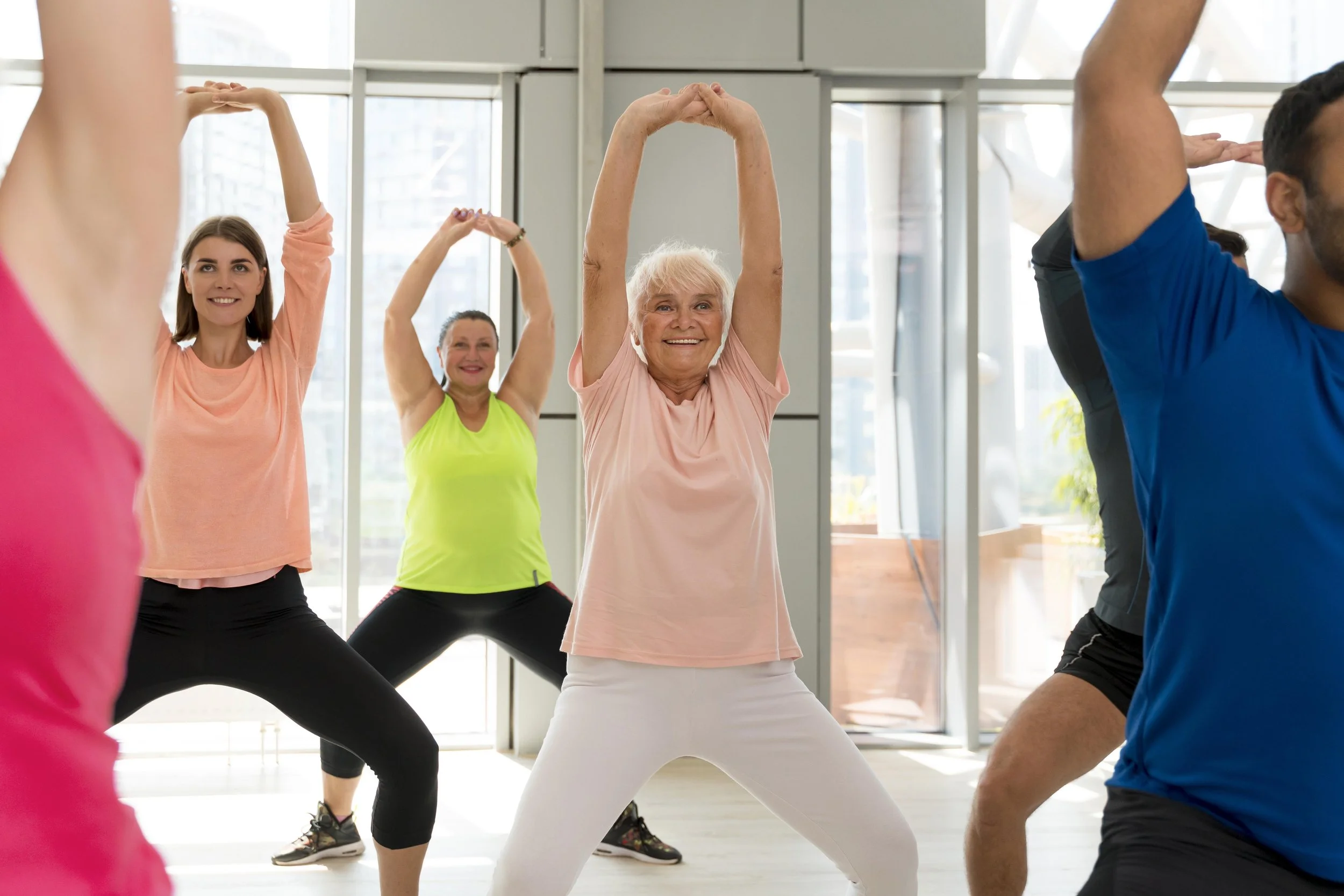
The programme is designed to help you prepare for, cope better with your treatment and improve your recovery after your treatment is over. We offer 10 fully funded, structured exercise classes that take place both before and after treatment to assist your recovery. These do not have to be in consecutive weeks: for instance you may have some sessions prior to treatment and/ or take breaks during treatment.
How to access the scheme
This is now a self-referral scheme.
To access the relevant digital self-referral form, email the Cancer Wellbeing and Information Centre on esneft.cancerwell-beingcentre@esneft.nhs.uk or call on 01206 745347.
You will then be provided with a link to a referral form to fill in, as well as more information about the class. If you need support filling in the form, someone at the centre will gladly assist you, just mention this when contacting them.
Where are the classes held?
The exercise classes are held weekly at either Colchester, Clacton, Jaywick or Harwich. You have the option to join classes “in person” or digitally. You are encouraged to attend “in person” if possible as you will meet others who have a cancer diagnosis and you may find that this can provide you with additional support.
Benefits of physical activity
Physical activity is part of prehabilitation-rehabilitation. It can help:
Reduce your length of stay in hospital
Enhance your recovery after treatment
Reduce complications after treatment
Enhance your quality of life
Help you take greater control
Nutrition
You will find below a video from Debbie Taylor, a cancer dietician at the Ipswich Hospital. In the video Debbie explains the role of cancer dieticians and the services that are available.
For additional information, please follow this link to the Healthy Eating and Cancer page on this website.
Macmillan resources:
Exercising safely with cancer booklet
Advisory
We have taken reasonable endeavours to ensure that the content of these classes is, to the best of our knowledge, accurate and suitable for most people. However, it is not tailored to any specific characteristic or person. Before following and undertaking the exercises here, you (and anyone else taking part) should consult with a health professional and/or your GP if you: consider it necessary; have any concerns about your health; are not sure whether the exercises are suitable; have any pre-existing health problems, injuries, or any current symptoms. Undertaking these exercises is at your own risk. You should stop exercising immediately and seek medical attention if you should feel any discomfort. We shall not be held liable or responsible for any injury, loss or damage of any kind (including, (without limitation) any direct, special, indirect or consequential damages) arising out of or in connection with the use of this exercise class by you or anyone else except to the extent that such liability cannot be limited or excluded by law. When participating in an exercise or exercise programme, there is the possibility of sustaining a physical injury. If you engage in this exercise programme, you agree that you do so at your own risk, are voluntarily participating in these activities and assume all risk of injury to yourself. All contracts subject to and governed by English Law and the exclusive jurisdiction of the Courts of England and Wales.